Photo: © Singita Ebony Lodge
Singita Ebony Lodge: 12 Tented Suites in a Suspended, Low‑Key Safari Retreat
Shaded by ebony trees on the banks of the Sand River, where leopards still sketch their own maps of the territory, Singita Ebony Lodge stands as the founding expression of a certain kind of contemporary safari. Adobe‑inspired architecture slips between the trunks, while raised walkways brush the canopy, suspending both time and perspective. More than a lodge, it is a discreet vantage point on wildlife and on the history of the South African safari itself, reinterpreted through a lens of understated luxury that always defers to the landscape.

Where Singita Began: the founding camp on the banks of the Sand River
Opened in 1993, Singita Ebony Lodge is Singita’s original camp in South Africa. Set within the private Sabi Sand Game Reserve, it has gradually become a benchmark address, regularly recognised for both its design and its conservation work. Standing among mature ebony trees along the Sand River, it occupies a strategic position: wildlife naturally gravitates towards this watercourse, easily observed from the lodge’s wide decks and suspended walkways.
From the outset, the ambition was to offer more than a simple safari stay. Ebony Lodge sits within a 45,000‑acre private reserve, known for its high concentrations of large mammals and frequent leopard sightings. This context has shaped the lodge’s identity: a place designed for quiet immersion in the bush rather than for architectural bravura or a busy social scene.
Over time, the lodge has evolved its aesthetic and the way its spaces are organised, while preserving its physical connection to the river and the trees that gave it its name. In 2018, its 25th anniversary underscored its pioneer status in a region now rich in high‑end options. Where some properties focus on scale or ever‑expanding amenities, Ebony Lodge keeps to a deliberately limited number of suites and a demanding, thoughtful approach to safari, echoing smaller‑scale retreats such as Canyon Ranch Woodside, which also prioritise a close relationship with the landscape and a slower sense of time.
Ebony’s location within Sabi Sand also makes it an ideal entry point for anyone interested in the story of contemporary safari in southern Africa: the original camp, reworked today through a decidedly modern reading of the traditional lodge.

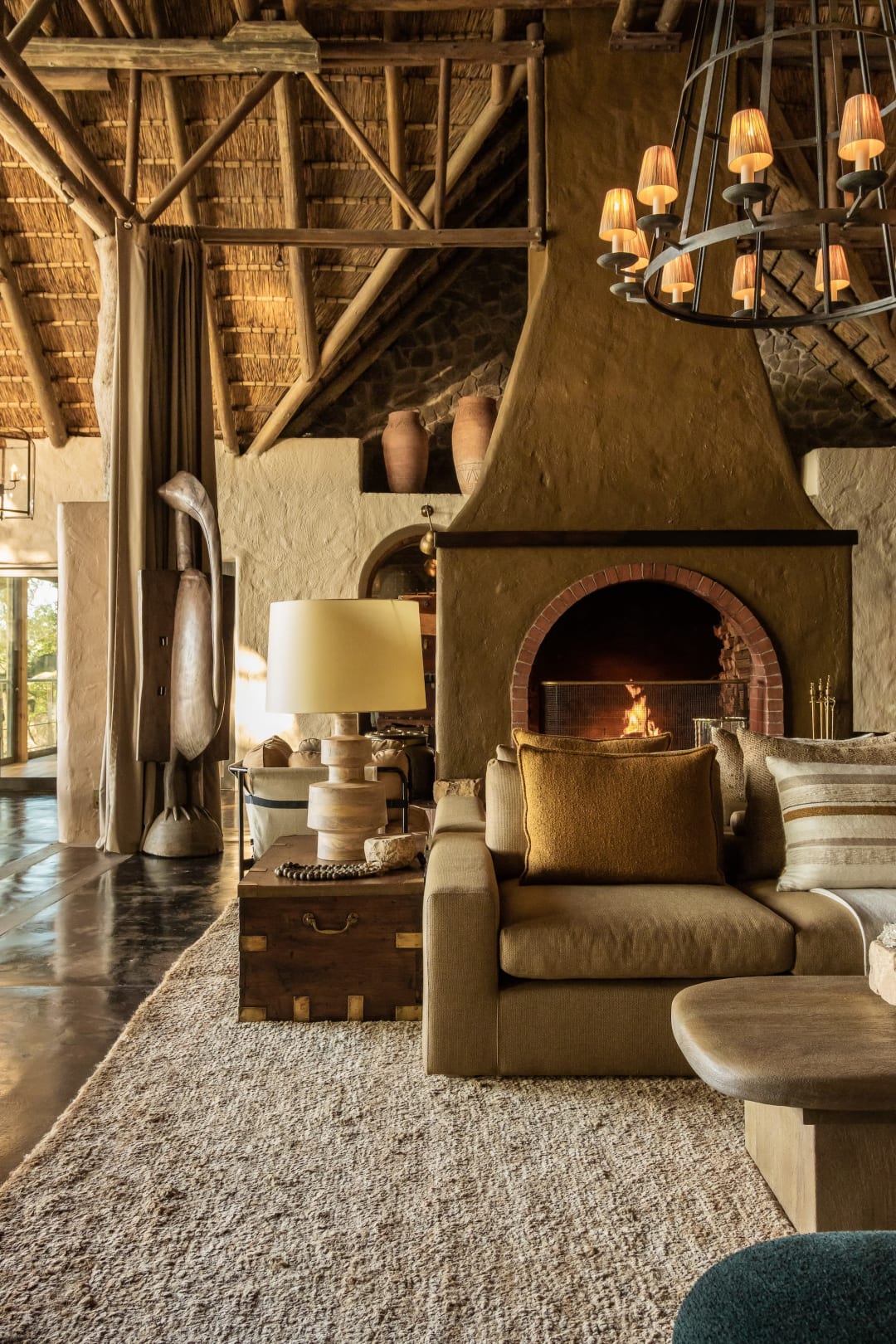
Photo: © Singita Ebony Lodge

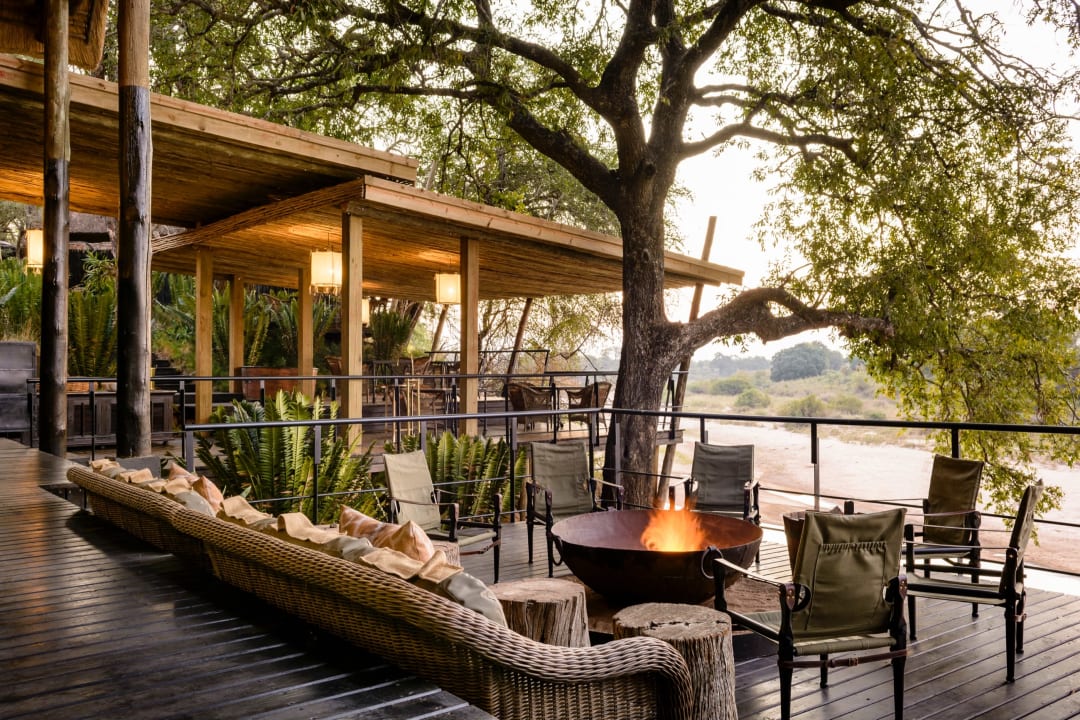
Photo: © Singita Ebony Lodge
Photo: © Singita Ebony Lodge
Photo: © Singita Ebony Lodge
Photo: © Singita Ebony Lodge
Photo: © Singita Ebony Lodge
Photo: © Singita Ebony Lodge
Photo: © Singita Ebony Lodge
Adobe architecture reimagined: between contemporary tented camp and bush lodge
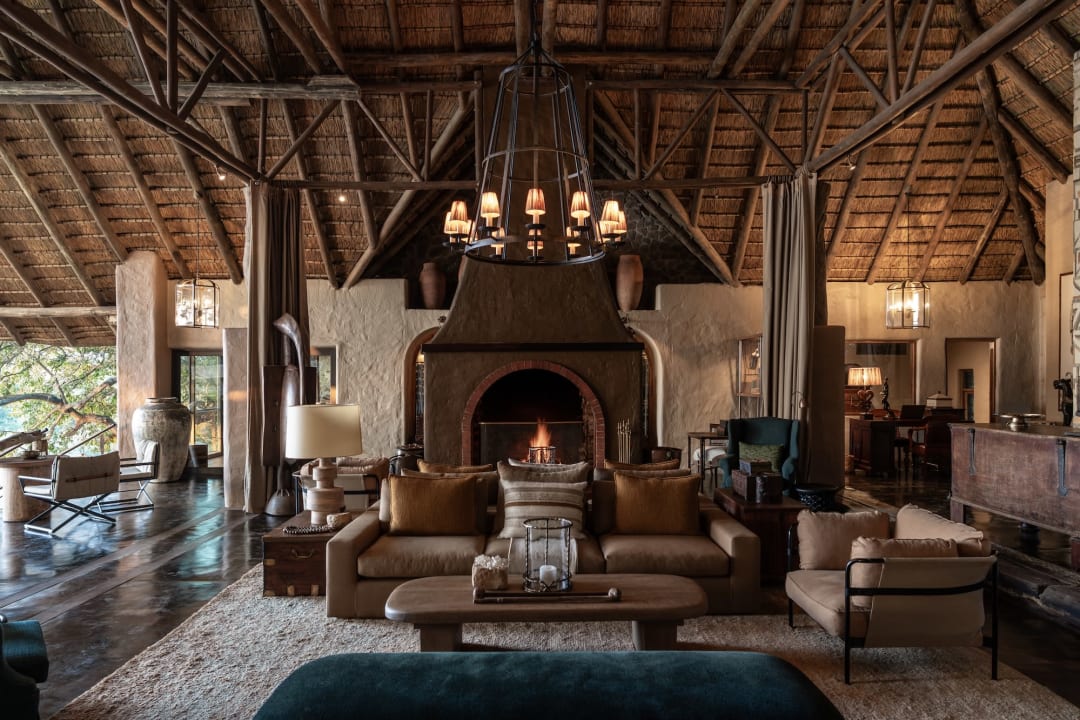
Much of Singita Ebony Lodge’s character lies in its architecture. The main building draws on what is described as a chunky, rounded adobe architecture, influenced by West and North Africa. Generous, rounded forms shape the volumes, far from the minimalist lines in vogue at many other bush hotels. This architectural base has been layered with canvas and timber elements to create a contemporary interpretation of the classic safari lodge, somewhere between a tented camp and a solid bush lodge.
The main building has been opened up to improve flow and, crucially, to offer more immediate access to views of the Sand River. This physical opening to the landscape continues outdoors: broad decks and suspended walkways trace the line of the river, acting as a series of lookouts over the bank and the water below. These elevated paths shape the rhythm of each day: you move from one space to another with the bush always in sight.
The approach departs from the grand, statement‑making architecture of large resort palaces such as the Grand Resort Bad Ragaz, without aiming for rusticity. Ebony Lodge has its own language: a generous adobe shell, updated with canvas and glass structures that evoke the idea of a safari tent while fully embracing modern comfort. The goal is not to recreate a period explorer’s camp but to offer real proximity to the outdoors while preserving the notion of a high‑end retreat.
Here, the landscape takes precedence over spectacle: the ebony trees, the Sand River bank and the passage of animals become the key architectural elements, framed by the structure rather than constrained by it.
Twelve tent‑style suites suspended above the bush: privacy, plunge pools and river views
The lodge is composed of just 12 suites, including two double family suites. This low capacity immediately steers the experience towards privacy and individual attention. Each suite is conceived as a self‑contained unit combining canvas and glass, creating a contemporary tented‑safari feel. The glass fronts open wide onto the vegetation and the river, while the canvas and tactile materials maintain a cocoon‑like atmosphere.
All suites feature a private plunge pool and an open fireplace. Their timber decks, conceived as platforms floating above the riverbank, offer wide‑angle views over the bushveld. It is common, from these decks, to see animals coming down to drink in the Sand River. Inside, the connection to the outdoors continues: expansive bathrooms with indoor and outdoor showers, a private terrace where guests can spend long stretches without leaving their suite, and a lightly handled colonial‑influenced mood, with African pieces and modern amenities.
The two double family suites meet a specific need: allowing parents and children to share the same overall space while still giving everyone a degree of independence. This focus on families is reflected more broadly in the lodge’s offering, which explicitly highlights “For Families” experiences.
This scale of 12 units, each with its own plunge pool and elevated terrace, places Ebony Lodge in the same family as other tightly curated properties such as Hotel du Castellet, which prioritise generous space per guest and carefully considered layouts over sheer room count. In the Sabi Sand context, this translates into a more direct relationship with the river and the tall trees, without the sense of crowding sometimes associated with larger setups.

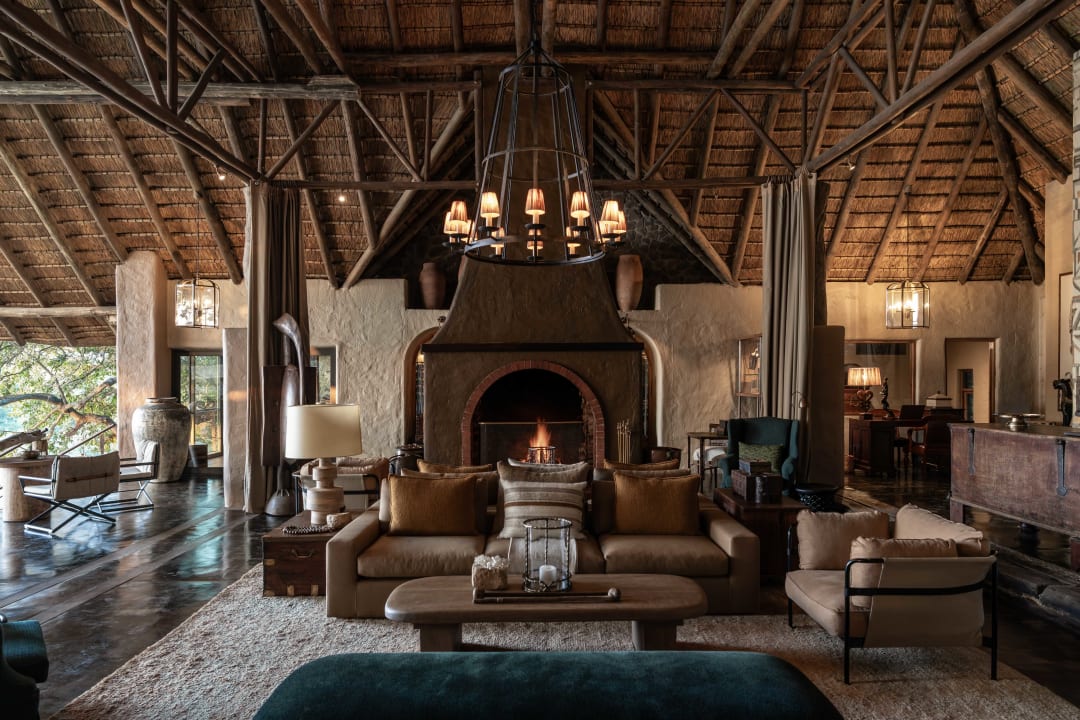
Photo: © Singita Ebony Lodge
Morning and evening game drives, guided walks and night skies: wildlife as the common thread
Singita Ebony Lodge gives access to a 45,000‑acre private tract within Sabi Sand, known for its dense populations of large mammals and regular leopard sightings. Morning and evening game drives form the backbone of the experience. Conducted in open vehicles, accompanied by a ranger and a guide, these outings allow close observation of lion, buffalo, elephant, hippo, cheetah and rhino. Sabi Sand is also regarded as one of the best places to see leopard, with a particular recommendation for night drives, when big cats are especially active.
For guests who prefer a more sensory, close‑up encounter with the land, guided walking safaris are offered, along with mountain‑biking. These experiences complement vehicle safaris by providing a different reading of the landscape, one that focuses more on tracks, vegetation and the sounds of the bush. Birdwatching is among the activities too, alongside dedicated time for stargazing, which takes on a special quality in a reserve far from major urban centres.
Days can also include quieter interludes around the main lodge pool, in the fitness room or within the wellness areas. The presence of an anti‑poaching canine unit, listed among the on‑site experiences, underlines a tangible commitment to wildlife protection. More than simple recreation, the activity programme makes animal life the true organising principle of each day, from first light through to after‑dark drives.
Dining, wine and wellness: life at the lodge paced by the Sand River
Once the safari vehicles are parked, life at Singita Ebony Lodge centres on the shared spaces opening onto the Sand River. Dining plays a key role here, with a kitchen described as influenced by African flavours and shaped by strong Western culinary traditions. Meals can be served on a broad dining deck or in the open‑air boma, which channels the conviviality of a firelit camp in a carefully designed setting that does not compromise on modern comfort.
The wine cellar, often referred to as a bush wine cellar, is part of a full‑scale “Wine Experience” developed by Singita. Without detailing specific labels, the setup gives wine tasting and discovery as much prominence as the cuisine itself. The approach recalls the importance of the table at certain European wellness properties, while situating it very clearly in the context of a lodge within a wildlife reserve.
On the relaxation side, the lodge offers a swimming pool, a fitness room and a wider wellness programme, complemented by yoga sessions. The on‑site boutique and gallery showcase objects and works that reflect the lodge’s aesthetic and African culture. These various spaces, open to the river and the ebony trees, encourage pauses between safaris without ever entirely losing touch with the surrounding nature.
Overall, the atmosphere is intimate rather than monumental: far from large thermal complexes such as those at the Grand Resort Bad Ragaz, the emphasis here is on coherence between gastronomy, wellness and wildlife viewing. Daily rhythms gradually align with sunrise and sunset, with the Sand River as a constant backdrop, visible almost continuously from the main shared areas.
Explore the surroundings

Sabi Sand Game Reserve
Private game reserve offering luxury accommodations and safaris to see leopards, lions and elephants.
Conservation, access and guest profile: who is Singita Ebony Lodge for?
As the non‑profit partner of the parent company, Singita Lowveld Trust focuses on conservation and community development in South Africa. The biodiversity projects associated with Singita Ebony Lodge aim to protect several emblematic species – rhino, leopard, lion, wild dog and vulture – while supporting local communities. The on‑site anti‑poaching canine unit, mentioned earlier, is a concrete illustration of this commitment. For some travellers, this focus on conservation and responsibility towards the land is as important as suite comfort or the quality of the game‑viewing.
Access is by air or road. The lodge can arrange scheduled flights or private charters to Singita’s own airstrip, about ten minutes from the property. From Johannesburg, the flight to Singita Sabi Sand takes around one hour. By road, the journey is roughly 6.5 hours from Johannesburg or just under three hours from Hazyview. In practice, flying tends to be the more coherent choice to reduce fatigue, especially for shorter stays; for those driving, it is worth planning rest stops and an early start.
The lodge is aimed primarily at demanding travellers seeking an intimate immersion in nature without forgoing a high level of comfort or well‑considered design. The 12 contemporary tent‑style suites with private plunge pools, suspended above the river, are particularly well suited to couples and families ready to invest time and budget in a safari experience structured around wildlife and conservation. “For Families” activities make it easier to bring children, although the setting remains that of a wildlife reserve where safety guidelines must be strictly followed.
Ebony Lodge will appeal less to those looking for a busy nightlife, a large choice of restaurants or an urban environment: everything here revolves around the Sand River, morning and evening safaris and time spent simply watching the bush. In terms of timing, the most sought‑after periods – and therefore the first to book up – are usually those that offer the best wildlife‑viewing conditions, so planning several months ahead is advisable. The property is particularly relevant for travellers interested in adventure, the natural world, safaris and wildlife observation rather than shopping or city outings, in the spirit of places which, like Canyon Ranch Woodside, make the setting itself and its environment their central focus.