

Burj Al Arab Jumeirah: Dubai’s Sail-Shaped Icon of Ultra-Luxury
Rising from its own man-made island, Burj Al Arab Jumeirah epitomises Dubai’s taste for spectacle and trailblazing hospitality. This modern emblem of the city promises an experience that goes far beyond a classic five-star stay, blending avant-garde design, intuitive service and extraordinary amenities. Its sail-shaped silhouette opens onto sweeping views of the Arabian Gulf, drawing travellers in search of unapologetic opulence. Expect palatial duplex suites, destination restaurants and concierge teams who orchestrate every detail with effortless precision.
With its world-class facilities and atmosphere of refined glamour, Burj Al Arab has become a touchstone for contemporary luxury travel. Whether you’re dreaming of a romantic escape or a restorative retreat, the hotel positions itself as the ultimate address. Every element is meticulously curated to create a stay that lingers in the memory, securing Burj Al Arab’s status as a true icon of high-end travel. For more details and reservations, visit the official website.
History of Jumeirah Burj Al Arab
The Burj Al Arab Jumeirah, an unmistakable symbol of Dubai, has a rich story shaped by an ambitious vision of hospitality and architecture. This section traces its origins, development and arrival on the world stage.
Origins of the project
The concept for the Burj Al Arab took shape in the 1990s. The idea was to create a hotel that would go far beyond conventional expectations of luxury.
The project was launched by the Crown Prince of Dubai, Sheikh Mohammed bin Rashid Al Maktoum, and designed by architect Tom Wright. Its distinctive silhouette recalls a ship’s sail, a tribute to the region’s maritime heritage.
The ambition was to position Dubai as a leading destination for high-end tourism.
Development and construction
Construction of the Burj Al Arab began in 1994, with meticulous attention paid to every detail of the build.
The hotel rises from an artificial island, linked to the mainland by a private causeway.
Materials include gold, marble and high-quality glass. To complete the project, technical innovations were introduced, among them an advanced air-conditioning system and high-speed elevators.
Opening and reception
The Burj Al Arab welcomed its first guests in December 1999. At its debut, the hotel claimed the status of the most luxurious hotel in the world.
Guests arrived to an exceptional setting, with personalised service and amenities on a rare scale.
Since opening, the Burj Al Arab has hosted celebrities and dignitaries, cementing its reputation as a must-visit address for travellers seeking a truly distinctive experience.


Architecture and design
The Burj Al Arab Jumeirah is a standout of contemporary architecture, remarkable for both elegance and innovation. Its bold profile is the result of a carefully considered design that marries luxury with functionality.
Architectural design
Designed by architect Tom Wright, the Burj Al Arab is inspired by the sails of a boat. Its unique form rising from the water suggests a ship at sea.
The building reaches 321 metres, making it one of the tallest hotels in the world. It stands on an artificial island anchored by reinforced piles, ensuring safety and durability.
Arches and facades of glass and stainless steel add a distinctly modern feel. This aesthetic choice enhances not only the visual impact of the building but also its energy efficiency.
Technical innovations
The Burj Al Arab incorporates cutting-edge technology. The air-conditioning system uses advanced methods to maintain optimal comfort despite Dubai’s high temperatures.
The elevators are among the fastest in the world, ensuring swift access to the suites. Each floor has been designed with well-planned corridors to provide different levels of privacy.
The building also features sophisticated lighting systems that create an atmosphere tailored to every moment of the day. These innovations elevate the guest experience while reinforcing the property’s role as a technological showcase.
Interior decoration
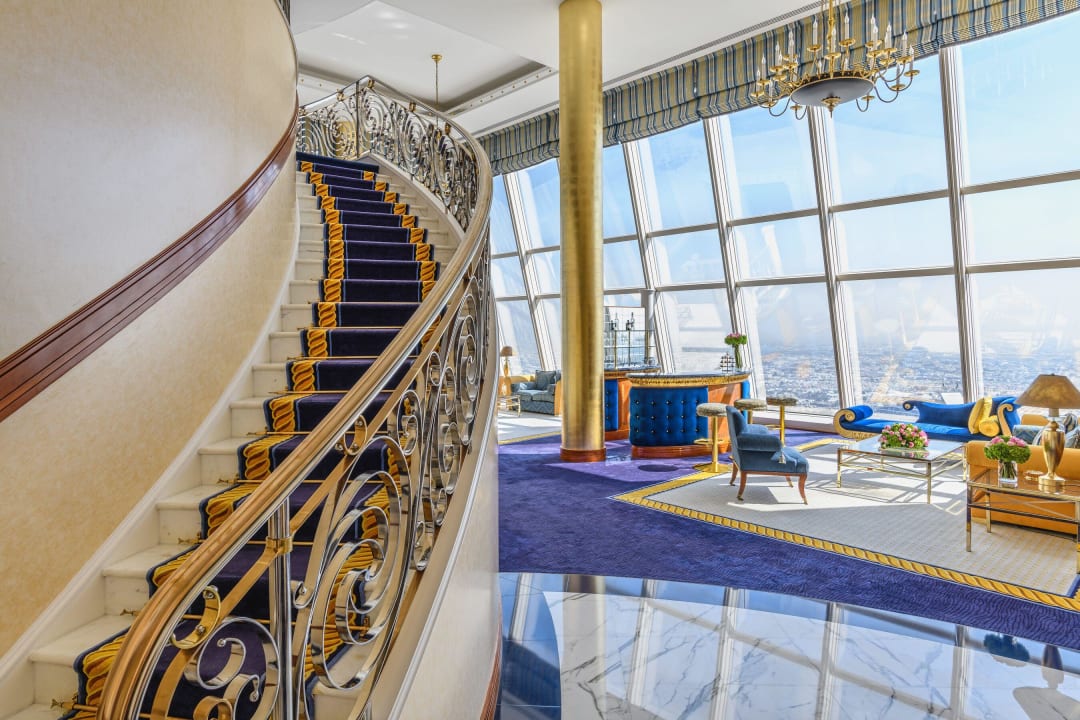
The interiors of the Burj Al Arab are a true celebration of luxury. Materials are of outstanding quality: Italian marble, rare woods and fine fabrics.
The suites are appointed with custom-made furniture, creating elegant and comfortable living spaces. Every area is carefully laid out to achieve visual harmony.
Warm tones and rich detailing contribute to an inviting atmosphere. Curated artworks add further sophistication, underlining the hotel’s prestige.
The Burj Al Arab experience
The Burj Al Arab offers an experience on a different scale. From the opulence of the suites to the culinary offering, every facet of this landmark hotel is designed around comfort and luxury.
Rooms and suites
The rooms and suites at the Burj Al Arab are synonymous with indulgence. Each space is thoughtfully designed with top-quality materials, including Italian marble and refined textiles.
The 202 suites all look out over the Persian Gulf. Guests can choose from several categories, from Deluxe Suites to the Royal Suite, which spans 780 m² and includes a private reception area.
Modern amenities such as audio systems and in-suite automation are integrated into every suite. Personalised hospitality, with a dedicated butler, ensures a consistently high level of service.
Dining
The Burj Al Arab is home to several internationally recognised restaurants. Al Mahara, renowned for its seafood, offers a striking underwater-inspired setting thanks to its immense aquarium.
Al Muntaha, on the 27th floor, serves gourmet cuisine with sweeping views over Dubai. Each restaurant is committed to creating a memorable dining experience.
Award-winning chefs craft refined menus showcasing seasonal ingredients. Vegetarian and vegan options are also available to suit all preferences.
Spa and leisure
Talise Spa is the Burj Al Arab’s sanctuary dedicated to wellbeing. It offers a range of exclusive treatments, including massages, facials and holistic therapies.
Facilities feature private treatment rooms with sea views, a hammam and a relaxation lounge. Every treatment is tailored to individual needs to ensure a deeply restorative experience.
Beyond the spa, the hotel offers leisure options such as outdoor pools, private beaches and yoga classes. These activities encourage a balanced lifestyle.
Exclusive services
Service at the Burj Al Arab is exceptional and entirely guest-focused. Every guest benefits from 24-hour butler service, ensuring constant personal attention.
The concierge team is on hand to arrange excursions, restaurant reservations or any specific request. Services also include luxury car transfers and childcare.
Guests can enjoy privileged access to exclusive events and bespoke experiences across Dubai. This level of service distinguishes the Burj Al Arab as a benchmark for luxury.


Significance in the world of luxury travel
The Burj Al Arab Jumeirah has become an icon of luxury travel, drawing visitors from around the globe. Its prestige rests on several key elements, from its signature architecture to its awards and its substantial influence on high-end tourism.
Symbol of Dubai
The Burj Al Arab is widely regarded as an emblem of Dubai. Its sail-like silhouette sets it apart from other buildings in the city. Built on an artificial island, it embodies the boldness and innovation that define Dubai.
This 321-metre-high building is far more than a hotel; it is a brand in its own right. Its presence resonates worldwide, attracting guests who dream of an unparalleled luxury stay.
Awards and recognition
The hotel has received numerous accolades that attest to its excellence. Among these is the title of “world’s best hotel” from various travel guides and specialist magazines. Such distinctions reinforce its reputation and standing within the hotel industry.
The Burj Al Arab is also recognised for its impeccable service and lavish facilities. Awards such as those from the World Travel Awards highlight its consistency in quality and innovation, further consolidating its place in luxury travel.
Impact on tourism
The Burj Al Arab has had a major impact on tourism in Dubai. By attracting affluent guests, it has encouraged the development of other luxury hotels and attractions in the region.
Its influence continues to drive growth in the sector, adding significant economic value to the city. This landmark also prompts tour operators to include Dubai in their itineraries, making the city an essential stop for travellers interested in luxury.
Sustainability and responsibility
The Burj Al Arab Jumeirah is firmly committed to sustainability initiatives and social responsibility. These efforts aim to reduce the hotel’s environmental footprint while supporting local communities.
Environmental sustainability
The Burj Al Arab Jumeirah has introduced several practices to promote environmental sustainability. A key focus is water management systems. The hotel collects and recycles wastewater for garden irrigation.
It also uses energy-efficient technologies such as LED lighting and efficient air-conditioning systems. Tree-planting initiatives further contribute to offsetting carbon emissions.
Key points:
Wastewater recycling
Energy-efficient technologies
Emissions offsetting
Community engagement
The hotel is also actively involved in community engagement. It supports various training programmes for young people, offering learning opportunities in the hospitality sector.
Partnerships with local schools foster skills development while strengthening ties with the community. These initiatives are essential to ensuring a positive long-term impact on society.
Key initiatives:
Training programmes for young people
Partnerships with local schools
Strengthening community ties
Explore the surroundings


Booking a stay at Burj Al Arab Jumeirah
Booking a stay at the Burj Al Arab Jumeirah calls for some planning. Travellers should be aware of the booking options and practical advice to ensure a smooth experience.
Reservations and availability
Reservations for the Burj Al Arab can be made directly via the hotel’s official website or through travel agencies. It is advisable to book well in advance, especially during the peak tourist season from November to March.
Rates vary depending on the season and the type of suite selected. There are also special offers, including packages with services such as dinners or excursions. To secure the best rates, comparing prices across different sites can be helpful.
Real-time availability can be checked on the hotel’s website. Last-minute bookings often mean higher prices and fewer suite options.
Tips for travellers
Before booking, it is worth defining the type of stay you are looking for. Travellers interested in specific experiences, such as gourmet dinners or spa treatments, should take these into account when choosing their dates.
Using loyalty programmes or credit cards with travel benefits can also be advantageous. These options may offer discounts or upgrades, enhancing the overall experience.
Finally, contacting the hotel directly can provide access to exclusive information and unadvertised offers. The hotel’s travel advisors are trained to help tailor a memorable stay.

